

What to add
Brand & product imagery
Logos, product shots, packaging, UI screenshots, and lifestyle images the agent can match or preserve.
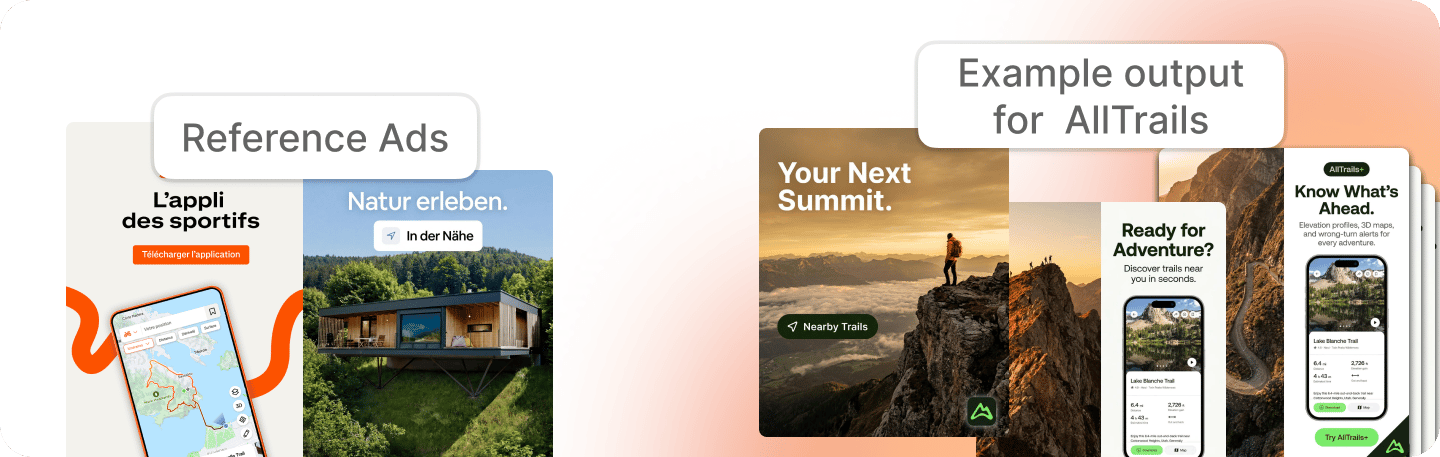
Reference ads
Examples of the format, composition, angle, or style you want, yours or someone else’s.
Winning ads
Proven performers saved from your own account or from competitor research.
Do-not-use examples
Examples of layouts, claims, visuals, or styles that are off-brand, too generic, too polished, or too artificial.
Minimum set for better output
If a generation feels generic, start here:- Logo file and brand colors.
- Product photos or UI screenshots.
- One or two ads you already like.
- One or two competitor or inspiration ads with the format you want.
- A short note explaining what should stay fixed: product, logo, tone, layout, offer, audience, or claim.
How it flows through creation
When you save a visual reference at the right brand or product scope, it becomes available to the agent for future work. If a specific asset must guide a generation, attach it, select it, or name it in the task. Strong references matter because they give the agent a concrete pattern for style, layout, product accuracy, or angle.Save the reference
Add the product shot, screenshot, ad, or visual direction to the right brand or product.
Name what matters
Give the reference a useful name: “approved logo top-right”, “best-performing testimonial static”, “exact product packaging”.
Reference it in the task
Tell the agent which reference to use and what to preserve. Example: “Use the packaging photo exactly; only change the background and headline.”
When references matter most
Exact products, logos, screenshots, and packaging
Exact products, logos, screenshots, and packaging
Use the narrowest possible reference set. If the agent invents packaging, fake UI, or wrong logos, remove vague references and attach the exact asset that must stay real.
Brand identity and layout
Brand identity and layout
Upload approved ads and examples of the visual hierarchy you want. Text instructions alone are often not enough for layout taste.
Competitor or inspiration formats
Competitor or inspiration formats
Save winners from competitor research, then ask Superscale to adapt the structure to your product rather than copy the competitor’s brand.
Video and B-roll
Video and B-roll
For video, references help with product visuals, scene style, creator look, and pacing. Combine them with video context.
Next: Keeping context fresh
Maintain your context as your brand evolves.